Inline Static Mixer for Water Treatment Systems
In line mixer water treatment is employed to ensure proper mixing of chemicals and water in water treatment plants. These mixers are used for improving the efficiency of water treatment by providing proper mixing of coagulants, disinfectants, and other water treatment chemicals.
Typical water treatment uses include:
- Coagulant and flocculant mixing
- Chlorine and disinfectant injection
- pH correction systems
- Sludge conditioning
They assist in minimizing chemical dosing and ensuring proper mixing in short pipeline lengths.
Advantages of Inline Static Mixers
NND Oil & Gas static mixers are designed to provide steady and reliable mixing action for a variety of mixing applications.
Key advantages include:
- 100% mixing efficiency for miscible liquids
- No moving parts, resulting in low maintenance
- Compact and space-saving design
- Suitable for high-pressure and high-temperature service
- Reliable operation in continuous processes
Special features such as end turbulators and fluid path breakers increase the efficiency of the mixers with minimal pressure loss.
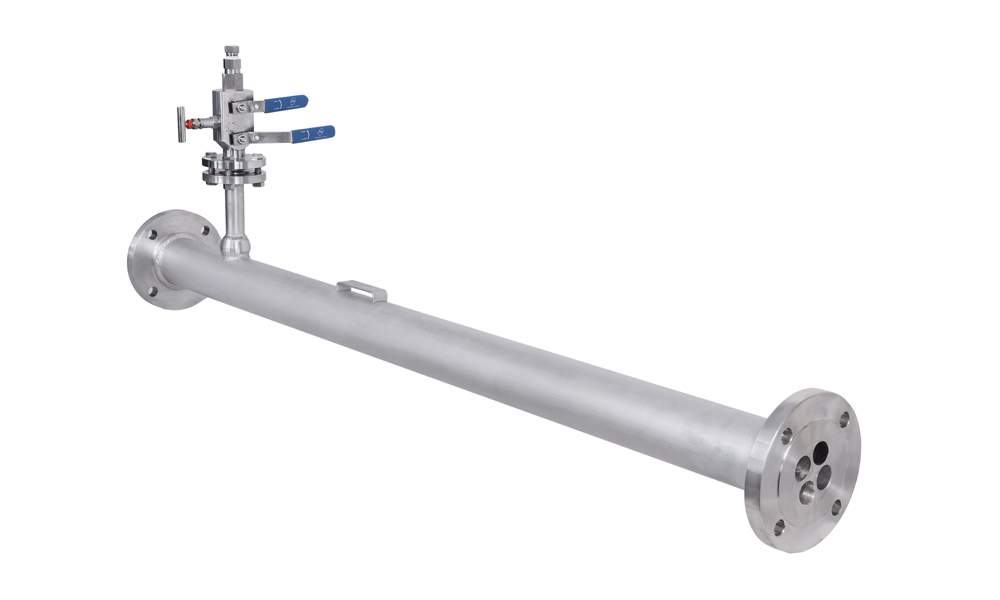
Inline Static Mixer Design and Construction
Inline static mixer design plays an important role in mixing efficiency and pressure drop. The mixing of the fluid is done well through the internal components of the mixer, which split and combine to ensure mixing.
Design considerations include:
- Type and arrangement of mixing elements
- Fluid properties such as viscosity and density
- Flow rate and Reynolds number
- Allowable pressure drop
A well-designed unit ensures effective mixing, low operation costs, and stability of the system.
Product Variants and Custom Options
Static mixers have various configurations according to the process requirements. There are different types depending on the size of the line, the flow rate, and the mounting position.
Custom options include:
- Different internal element configurations
- Flanged or welded end connections
- Special materials for corrosive or abrasive fluids
- Custom lengths based on mixing requirements
This makes it convenient to install the static inline mixer to an existing pipeline system.
Technical Specifications of Static In-Line Mixer
| Parameter | Specification |
| Size | 1” to 12” |
| Pressure Rating | 150, 300, 400, 600, 900, 1500, 2500 ANSI B16.5 Class |
| Mixing Efficiency | 100% for miscible liquids |
| Pressure Drop | Less than 0.7 Bar |
| Materials of Construction (MOC) | Carbon Steel, Stainless Steel, Duplex Stainless Steel, Inconel, Hastelloy, Titanium, Teflon, Polypropylene, etc. |
Why Choose NND Oil & Gas for Static Inline Mixers
NND Oil & Gas offers reliable inline static mixer solutions for industrial and process applications. We focus on quality manufacturing, application suitability, and reliability.
Our static mixers are available in standard and custom designs to meet the requirements of each application. We have experience in oil and gas, chemicals, and water treatment, which helps us assist our customers in selecting, customizing, and delivering their products on time.
Request a Quote for Your Inline Chemical Mixer
If you have a requirement or would like more information on our inline mixers, please contact us. We will be able to assist with any product information, usage, customization, and quotes for your industrial or water treatment needs.
Frequently Asked Questions
1. How do I select the right inline static mixer for my process?
The selection of the appropriate static mixer is influenced by the pipe diameter, flow rate, fluid properties, and mixing requirements. Considerations should also include the pressure drop limits and material compatibility to ensure that the mixer is compatible with the existing pipeline.
2. Is a static inline mixer suitable for continuous operation?
The design makes it appropriate for use in continuous operations since it does not involve any moving parts. This makes it appropriate for long-term use since there are no parts to maintain.
3. How much maintenance does an inline mixer require?
Inline mixers require minimal maintenance because of their fixed internal configuration. Routine inspection at planned shutdowns of the plant may be all that is necessary, as there are no moving parts or seals that will wear over time.
4. Can a static inline mixer be installed in existing pipelines?
Yes, they can be integrated into existing pipelines through flanged or welded interfaces. They can also be used in retrofit situations where improved mixing is required.