Dosing System
HP Dosing System
An HP dosing system is used for injecting treatment chemicals into high-pressure boiler feed water systems. The system maintains proper pH levels in the…
High-accuracy glandless hydraulic diaphragm pumps designed for reliable dosing of corrosive chemicals, viscous fluids, and abrasive slurries.
Tell us your duty and our engineers will respond within one business day.
NND Oil & Gas manufactures Glandless Hydraulic Diaphragm Pumps engineered to deliver precise, contamination-free dosing in some of the most demanding process environments. While these pumps typically involve a higher initial investment compared to conventional metering pumps, their hermetically sealed, leak-free design makes them the preferred choice wherever process safety, accuracy, and fluid containment are critical.
Our glandless hydraulic diaphragm pumps are available in a range of sizes and configurations, using single or double diaphragm arrangements to safely handle a wide spectrum of fluids — from thin, volatile liquids to viscous and abrasive slurries, corrosive chemicals, and other hazardous or hard-to-handle media.
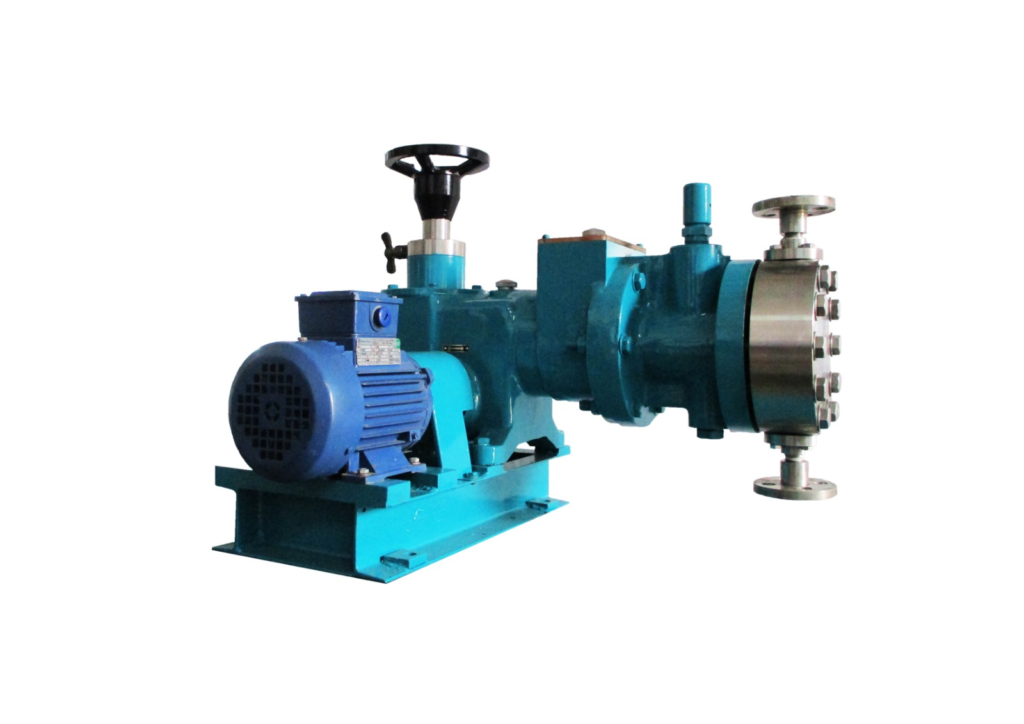
In a glandless hydraulic diaphragm pump, the diaphragm acts as a flexible partition between the hydraulic actuating fluid and the process fluid being dosed. Hydraulic oil drives the diaphragm, allowing the pump to generate high pumping pressures while completely isolating the metered fluid from the pump’s mechanical components. Since there is no direct mechanical contact or stuffing box in the fluid path, the design eliminates leakage paths entirely—making it a true glandless, zero-leak metering solution.
The diaphragm is maintained in continuous hydraulic balance, with hydraulic fluid on one side and process fluid on the other, which significantly extends diaphragm life and ensures consistent metering accuracy over long duty cycles.
The diaphragm material is typically PTFE (Teflon), with stainless steel diaphragms available for extreme-duty or high-temperature conditions. Because the diaphragm completely separates the hydraulic and process sides, there is no leakage of the metered fluid into the environment.
The pump’s hydraulic system is protected by a built-in relief valve, a diaphragm-actuated compensating valve, and a continuous hydraulic oil venting arrangement, ensuring stable, safe operation at all times.
A rupture detection system safeguards against diaphragm failure. In a double-diaphragm design, the two diaphragms are separated by a thin spacer and linked through a light vacuum. If a diaphragm ruptures, this vacuum converts to pressure, which is detected via a compound gauge or pressure switch—alerting operators before the metered fluid can be contaminated or escape into the hydraulic system.
Wetted parts are available in a wide range of metallic and non-metallic materials, selected to suit the chemical compatibility, temperature, and abrasiveness of the fluid being dosed—including various stainless steel grades, corrosion-resistant alloys, and engineered plastics such as PTFE and PVDF.
Glandless hydraulic diaphragm pumps are widely used for:
As an ISO 9001:2015 certified manufacturer, NND Oil & Gas engineers glandless hydraulic diaphragm pumps for safety, accuracy, and long-term reliability in continuous industrial service. Each pump can be configured to your specific pressure, capacity, and material requirements, supported by our engineering expertise across oil & gas, chemical, fertilizer, and process industries in India and overseas.
For pump sizing, capacity selection, or technical guidance for your specific application, get in touch with our engineering team.
In a mechanical diaphragm pump, the diaphragm is driven directly by a mechanical linkage, which limits the pressure it can generate. In a hydraulic diaphragm pump, hydraulic oil transmits force evenly across the diaphragm, keeping it in continuous hydraulic balance. This allows significantly higher pumping pressures, longer diaphragm life, and more accurate dosing compared to a mechanical design.
Yes. The hydraulic actuation design allows glandless diaphragm pumps to achieve high pumping pressures while maintaining precise dosing accuracy. They are well suited for high-pressure chemical injection in oil & gas, petrochemical, and other demanding process applications, including those requiring API 675-grade accuracy.
These pumps are designed to handle a wide range of fluids, including thin volatile liquids, viscous and abrasive slurries, corrosive acids and alkalis, toxic or hazardous chemicals, and other hard-to-handle process media. The material of construction for wetted parts is selected based on the specific fluid’s chemical compatibility, temperature, and abrasiveness.
The pump incorporates multiple layers of protection—a built-in hydraulic-side safety relief valve, a diaphragm-actuated compensating valve, a continuous hydraulic oil venting system, and a diaphragm rupture detection system. Together these ensure safe, stable, and reliable operation even under continuous-duty conditions.
An HP dosing system is used for injecting treatment chemicals into high-pressure boiler feed water systems. The system maintains proper pH levels in the…
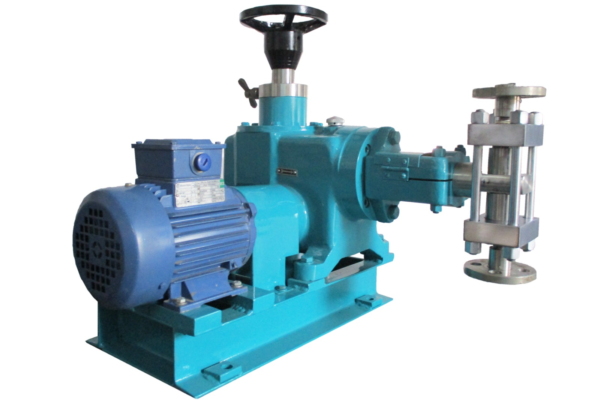
High-pressure plunger metering pumps engineered for precise chemical dosing, reliable performance, and continuous operation in demanding industrial applications.
An Auto-Flocculant Dosing System is designed for the automatic preparation, ageing, and dosing of flocculant solutions used in industrial water and wastewater treatment processes.…
