Dosing System
Additive Injection Packages for JET Fuel System
An Additive Injection Package for JET Fuel System is engineered to deliver controlled and accurate additive dosing into aviation fuel transfer and distribution lines.…
A Polymer Dosing System is designed for the preparation, ageing, and controlled dosing of polymer solutions for industrial water and wastewater treatment.
Tell us your duty and our engineers will respond within one business day.
A Polymer Dosing System is designed for the preparation, ageing, and controlled dosing of polymer solutions for industrial water and wastewater treatment. The system helps improve coagulation, flocculation, sludge thickening, and solid-liquid separation efficiency by ensuring accurate polymer preparation and stable chemical injection.
In water treatment operations, polymers are commonly used to bind suspended particles and improve sedimentation performance. Stable and accurate polymer dosing is critical because even a correctly prepared solution will underperform if injection flow is inconsistent, dosing timing is off, or chemical concentration fluctuates during treatment.
Before dosing begins, the polymer solution passes through a controlled preparation cycle — wetting, dilution, ageing, and maturation, to ensure full molecular activation. The dosing arrangement manages the injection stage: controlling flow rate, maintaining concentration stability, and timing injection throughout the treatment cycle.
The dosing sequence includes:
A polymer dosing system in water treatment is used to promote particle aggregation and improve separation efficiency during clarification and sludge treatment.
The system is widely used in:
By maintaining controlled polymer dosing, the system supports improved settling performance and more efficient sludge handling operations.
The multi-chamber configuration ensures that only fully activated polymer solution reaches the dosing pumps. Each stage — preparation, ageing, and storage acts as a quality gate, preventing under-hydrated polymer from entering the injection system, where it would reduce treatment efficiency and increase chemical consumption.
The storage chamber provides a buffer volume that maintains a continuous dosing supply even during preparation cycle transitions, supporting uninterrupted treatment operation.
The prepared polymer solution is transferred to the dosing section, where metering pumps inject the chemical into the treatment line at controlled flow rates. Accurate injection control is essential for maintaining treatment efficiency and reducing chemical wastage.
The dosing assembly may include:
The arrangement is designed for continuous operation under varying plant load conditions.
The Polymer System can be supplied with automatic monitoring and process control features for stable operation during continuous treatment cycles.
Automation options may include:
Automated dosing control reduces the risk of under- or over-dosing during shift changes, flow surges, or unattended plant operation, maintaining consistent treatment performance without continuous operator oversight.
The system construction is selected according to polymer chemistry, treatment conditions, and plant operating requirements. Wetted components are designed for continuous chemical handling and operational durability.
Material options may include:
The structural arrangement is designed for long operational service life in industrial treatment environments.
| Parameter | Specification |
|---|---|
| System Type | Polymer Dosing System |
| Polymer Type | Powder or Liquid Polymer |
| Tank Configuration | Multi-Chamber Tank Arrangement |
| Mixing System | Low-Speed Agitator |
| Dosing Method | Metering Pump-Based Injection |
| Control System | Manual / PLC-Based |
| Tank Material | SS304 / SS316 / HDPE / FRP |
| Mounting Type | Skid Mounted / Floor Mounted |
| Application | Water & Wastewater Treatment |
| Operating Mode | Continuous Dosing |
NND Oil & Gas provides engineered systems designed for reliable polymer preparation, accurate dosing control, and stable operation in industrial water and wastewater treatment applications.
We offer standard and custom-designed dosing packages tailored to treatment capacity, polymer characteristics, and process requirements, ensuring consistent flocculation performance, efficient sludge conditioning, and long operational service life. Contact us today to discuss your requirements and get expert assistance for your application.
Calibration depends on dosing precision requirements and operating variation. Systems treating fluctuating wastewater loads generally require more frequent verification to maintain dosing consistency.
This often indicates that the polymer is not properly interacting with sludge particles. Poor activation, incorrect polymer type, or unstable feed conditions can prevent effective moisture separation even when the dosage appears correct.
Incorrect polymer selection may reduce bonding efficiency and increase chemical consumption. Common effects include: Weak floc structure Poor settling speed Higher sludge moisture content Unstable clarification performance
Not without reconfiguration. Standard polymer preparation units are typically configured for either dry or liquid polymer, since the preparation sequence differs significantly. Dry polymer requires a dissolution and wetting stage; liquid polymer requires dilution but not a full hydration cycle. Some systems are designed with interchangeable configurations to accommodate both types, but this must be specified at the engineering stage, it is not a field modification. Inquire Now
An Additive Injection Package for JET Fuel System is engineered to deliver controlled and accurate additive dosing into aviation fuel transfer and distribution lines.…
An HP dosing system is used for injecting treatment chemicals into high-pressure boiler feed water systems. The system maintains proper pH levels in the…
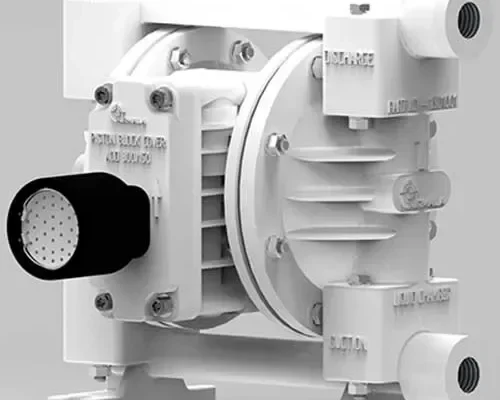
AODD Pump Air Operated Double Diaphragm Pump for Industrial Applications The AODD pump is one of the most efficient and reliable workhorses in the…
