Diaphragm pumps are widely used in industrial facilities to transfer chemicals, process fluids, slurries, and other challenging liquids. Two common types are air-operated double-diaphragm (AODD) pumps and electrically operated double-diaphragm (EODD) pumps.
Both use flexible diaphragms to move fluids, but their drive mechanisms differ. AODD pumps rely on compressed air, while EODD pumps use an electric motor. This affects their energy requirements, installation, maintenance, and operating characteristics. Understanding these differences helps engineers select the right pump for their process.
How Do AODD and EODD Pumps Work?
Both pump types use the positive displacement principle. Their diaphragms move back and forth, creating suction and discharge within the pumping chambers. Check valves control the direction of fluid flow during each cycle.
AODD Pump – Air-Driven Operation
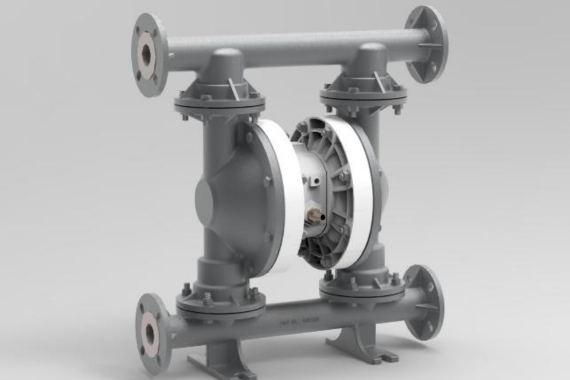
An AODD pump uses compressed air to move two connected diaphragms. An air distribution mechanism alternately directs air to each side, creating suction and discharge. While one chamber draws liquid in, the other pushes it towards the outlet. The cycle then reverses and continues as long as compressed air is supplied.
AODD pumps can handle corrosive or viscous liquids, abrasive fluids and liquids containing suspended solids when the wetted materials and pump design suit the application.
EODD Pump – Electric Drive
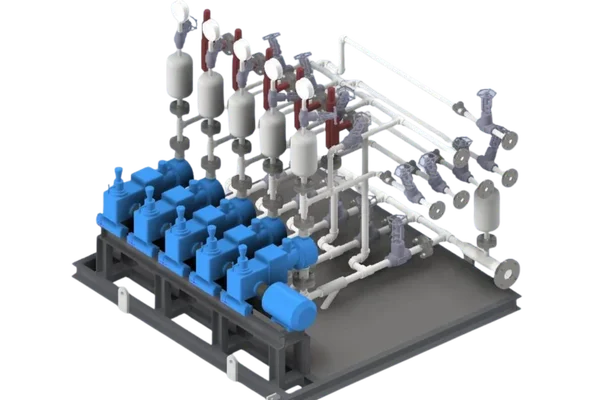
An EODD pump uses an electric motor to drive its diaphragm mechanism. The motor’s rotary movement is converted into reciprocating movement, producing the suction and discharge strokes. Unlike an AODD pump, it does not depend on a compressed-air supply.
NND’s EODD pump uses a mechanically synchronized drive assembly. Its product information also highlights reduced pulsation and automatic stalling under high discharge pressure. This arrangement can be considered where a facility wants diaphragm-based fluid transfer without relying on its compressed-air network.
This arrangement can be useful where facilities want diaphragm-based fluid transfer without relying on compressed air. Explore NND’s EODD pump for more details about its design and operating features.
AODD vs. EODD Pumps: Key Differences
The main difference is their power source, but this also affects installation, energy requirements, and operation.
| Comparison factor | AODD pump | EODD pump |
| Power source | Compressed air | Electricity |
| Drive mechanism | Pneumatic system | Electric motor and mechanical drive |
| Flow adjustment | Air pressure and flow | Depends on motor and control design |
| Discharge behavior | Pulsating flow | Designed for reduced pulsation |
Actual performance depends on the pump model, fluid properties, and operating conditions. Always check the manufacturer’s technical specifications before selecting a pump.
Energy Consumption and Operating Costs
Energy consumption is important, particularly when pumps operate for extended periods. AODD pumps depend on compressed air, usually supplied through a central compressor system. Producing and distributing compressed air consumes energy, while leaks and pressure losses can increase operating costs.
EODD pumps use an electric motor to generate diaphragm movement, avoiding the need for compressed air to drive the pump. However, this does not automatically make every EODD installation cheaper to operate. Actual costs depend on motor efficiency, operating load, running hours, electricity tariffs, and the efficiency of the existing compressed-air system.
Before comparing the two, consider:
- Energy required to operate the pump.
- Efficiency of the available air or electrical supply.
- Expected operating hours.
- Total energy cost over the equipment’s service period.
Comparing these factors provides a more realistic picture than considering the pump’s purchase price alone.
Safety and Installation Requirements
The installation environment can influence pump selection. AODD pumps do not require an electric motor for their primary drive, which can be advantageous in certain applications where avoiding electrical drive equipment is preferred. However, they are not automatically suitable for every hazardous area. The complete installation must meet applicable safety requirements.
EODD pumps require an electrical supply and an appropriately selected motor. In classified hazardous locations, the motor and associated electrical equipment must have suitable protection and certification.
The installation requirements can be summarized as follows:
- AODD: Requires a correctly sized compressed-air supply, suitable connections, and appropriate air quality.
- EODD: Requires an appropriate electrical supply, motor connections, and suitable control arrangements where necessary.
Engineers should check available utilities, installation space, and site safety requirements before making a decision.
Maintenance Considerations
Both pump types require regular inspection of their diaphragms, check valves, fluid chambers, and connections. However, their drive mechanisms introduce different maintenance requirements.
| Maintenance area | AODD pump | EODD pump |
| Drive mechanism | Air distribution system | Motor and mechanical drive |
| Utility supply | Air quality and connections | Electrical connections |
| Diaphragms | Wear and damage | Wear and damage |
| Valves | Blockage and wear | Blockage and wear |
For AODD pumps, moisture or contamination in the air supply can affect pneumatic operation. EODD pumps require attention to motor condition, vibration, and mechanical wear.
For both types, diaphragm material must be compatible with the fluid’s chemical composition and operating temperature. Maintenance planning should also consider spare-part availability and access for inspection and repairs.
Choosing the Right Pump for Your Application
Start with the fluid and the duty the pump must perform. For example, a plant transferring batches from drums may consider an AODD pump if a suitable air supply is already available. A facility with a fixed transfer line and limited compressed-air capacity may consider an EODD pump if the electrical supply and model operating limits match the duty.
Use these checks to compare shortlisted models.
- Fluid properties: Check viscosity, temperature, solids content and compatibility with wetted materials.
- Flow and pressure: Compare the pump performance data at the required flow rate and discharge pressure.
- Operating pattern: Confirm suitability for intermittent or continuous operation. Verify self-priming and dry-running limits if the process requires either capability.
- Installation and total cost: Confirm utility capacity, space and site requirements. Compare purchase price, energy use, spares and potential downtime.
Explore NND’s AODD pumps for available configurations and material options.
Conclusion
AODD and EODD pumps use similar diaphragm-based fluid transfer principles, but their drive mechanisms create differences in energy consumption, installation, and maintenance. AODD pumps rely on compressed air, while EODD pumps use an electric motor.
An AODD pump may suit applications where compressed air is available and pneumatic operation meets process requirements. An EODD pump offers an alternative where reduced dependence on compressed air and controlled diaphragm movement are important.
Ultimately, the choice depends on fluid properties, flow and pressure requirements, available utilities, site conditions, and long-term operating costs.
Frequently Asked Questions
What is the main difference between AODD and EODD pumps?
An AODD pump uses compressed air to move its diaphragms, while an EODD pump uses an electric motor and mechanical drive assembly.
Are EODD pumps more energy-efficient than AODD pumps?
EODD pumps avoid the need for compressed air to drive the pump. However, actual energy savings depend on motor efficiency, operating conditions, and the efficiency of the facility’s compressed-air system.
Can both AODD and EODD pumps handle corrosive chemicals?
Yes, both can be configured for chemical handling, provided the diaphragms, valves, and other wetted components are compatible with the chemical composition and operating temperature.