Two-phase separators are used in oil and gas processing to separate an incoming stream into gas and liquid phases. The right vessel size depends on how much gas and liquid it must handle and how those fluids behave under operating conditions.
Two important considerations in this process are liquid retention time and gas capacity. Retention time relates to the volume available for liquid inside the vessel, while gas capacity relates to the available space for gas to flow through the separator without excessive liquid carryover.
What Determines the Size of a Two-Phase Separator?
A two-phase separator must accommodate the incoming gas and liquid flow rates while providing sufficient space for phase separation.
The sizing process generally involves two separate checks:
- Liquid capacity: Determines whether the vessel provides sufficient liquid volume for the required retention time.
- Gas capacity: Determines whether the gas section provides enough flow area to limit gas velocity and allow liquid droplets to separate.
The vessel dimensions must satisfy both requirements. Depending on the process conditions, either liquid capacity or gas capacity may determine the required vessel size.
The three-phase separators page provides an overview of separator configurations and their applications.
Understanding Liquid Retention Time
Liquid retention time, also called residence time, is the period during which liquid remains inside the separator before leaving through the liquid outlet.
It is an important sizing consideration because liquid needs sufficient time inside the vessel for the required separation process to take place.
The required retention time depends on factors such as:
- Liquid flow rate.
- Fluid properties.
- Operating pressure and temperature.
- Required separation quality.
- Characteristics of the liquid being processed.
How is Retention Time Calculated?
For example, if liquid enters at 500 litres per minute and the process calls for 3 minutes of retention, the separator needs to hold 1,500 litres of liquid during normal operation.
Important: The required retention time should be established from the process and fluid characteristics. A single retention-time value should not be applied to every separator application.
Understanding Gas Capacity
Gas capacity refers to the amount of gas a separator can handle while maintaining the required gas-liquid separation conditions.
Inside the vessel, gas flows through the available gas section while liquid droplets move under gravity towards the liquid section. If gas velocity is too high, some droplets may be carried towards the gas outlet instead of separating from the gas stream. This is called liquid carryover.
Therefore, the gas section must provide sufficient cross-sectional area for the operating gas flow rate.
Checking the Space Available for Gas Flow
Engineers check how quickly the gas will move through the space above the liquid at the vessel’s operating pressure and temperature. They also consider whether a mist extractor, an internal device that removes liquid droplets from the gas, is fitted.
Factors That Influence Separator Sizing
Retention time and gas capacity are not evaluated independently of operating conditions. Several process parameters influence the calculations and the final vessel dimensions.
Gas and Liquid Flow Rates
The expected gas and liquid flow rates are important starting points for separator sizing.
- Higher liquid flow rates increase the liquid volume required for a specified retention time.
- Higher gas flow rates increase the required gas flow area for a given allowable gas velocity.
Both flow rates should represent the relevant operating conditions used for the design.
Operating Pressure and Temperature
Pressure and temperature affect gas and liquid properties, including their densities.
These properties influence gas velocity calculations and the behaviour of liquid droplets inside the vessel.
For this reason, gas and liquid densities should be evaluated at the applicable operating conditions rather than assumed from unrelated reference conditions.
Fluid Properties
Fluid properties influence the separation process and the selection of sizing parameters.
For example, foaming liquids, viscous fluids, and fluids with different droplet characteristics may require additional consideration during the design process.
Separator Orientation
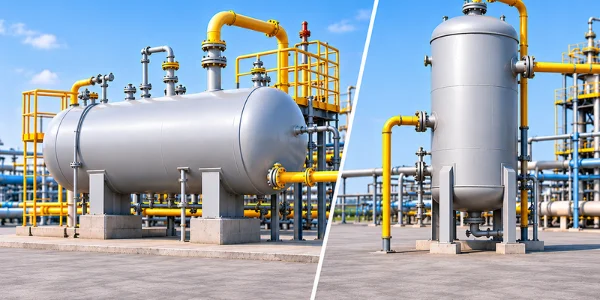
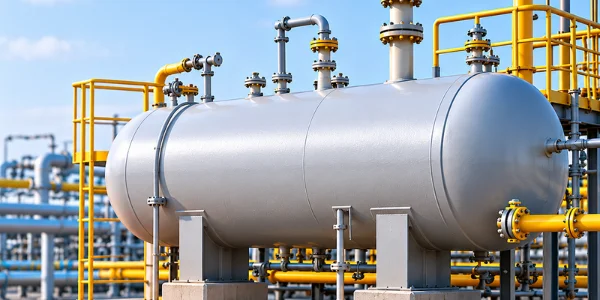
Two-phase separators are generally available in horizontal and vertical configurations.
| Consideration | Horizontal Separator | Vertical Separator |
| Vessel arrangement | Horizontal | Vertical |
| Liquid section | Along the lower part of the vessel | At the bottom of the vessel |
| Gas section | Above the liquid level | Above the liquid collection area |
| Gas flow area | Depends on liquid level | Based on available cross-sectional area |
| Sizing considerations | Liquid volume, gas area, and effective length | Liquid volume and gas cross-sectional area |
The orientation affects how the available vessel volume is divided between the gas and liquid sections. Therefore, the sizing calculations must account for the selected configuration.
How Retention Time and Gas Capacity Work Together
A separator cannot be sized by considering only one of these requirements. For example, a vessel may provide sufficient liquid volume for the required retention time but still have insufficient gas flow area for the incoming gas rate.
Similarly, a vessel may provide enough gas flow area but not enough liquid holding volume.
The sizing process must therefore evaluate both requirements:
- Calculate the liquid volume required for the specified retention time.
- Determine the allowable gas velocity using an appropriate sizing method.
- Calculate the gas flow area required for the operating gas flow rate.
- Evaluate vessel diameter and length against both requirements.
- Review the selected dimensions against the process conditions and applicable design requirements.
The requirement that results in the more demanding vessel dimensions influences the final sizing. For a broader overview of separator configurations, explore our article on separator oil and gas.
Practical Considerations During Separator Sizing
Before finalizing the dimensions of a two-phase separator, the following information should be considered:
- Gas and liquid flow rates.
- Operating pressure and temperature.
- Gas and liquid densities at operating conditions.
- Required liquid retention time.
- Required gas-liquid separation performance.
- Selected vessel orientation.
- Inlet device and mist extractor arrangement.
- Applicable vessel design requirements.
These inputs help establish the basis for the sizing calculations. The final vessel dimensions should be evaluated against the actual process requirements rather than selected using a single general sizing rule.
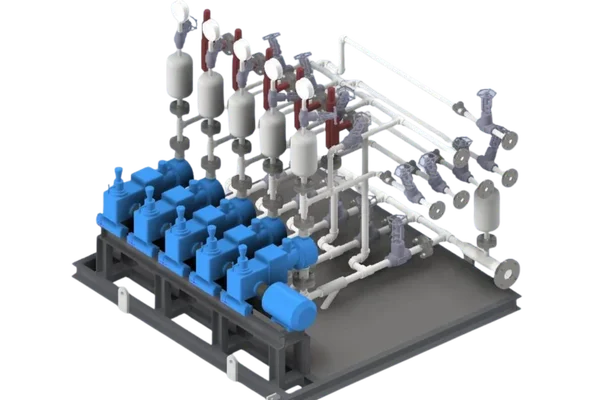
For projects involving integrated separation equipment, separator skids are another relevant configuration to consider. The arrangement of the vessel and associated equipment depends on the requirements of the process package.
Conclusion
Two-phase separator sizing involves evaluating both liquid retention time and gas capacity. Retention time determines the liquid volume required inside the vessel, while gas capacity determines the flow area needed to handle gas at an acceptable velocity.
Both requirements influence the vessel dimensions and must be considered alongside fluid properties, operating conditions, and separator configuration.
A suitable sizing approach begins with accurate process data and evaluates the liquid and gas requirements together. This provides the basis for selecting vessel dimensions that correspond to the intended separation duty.
Frequently Asked Questions
What happens if a two-phase separator has insufficient liquid retention time?
The available time for the required liquid separation may be insufficient. The effect depends on the fluid properties and the separation duty.
Why does gas flow speed matter in a separator?
If gas moves too fast, it can carry liquid droplets into the gas outlet. The vessel needs enough space for gas to flow and for droplets to separate.
Does separator orientation affect gas capacity calculations?
Yes. Horizontal and vertical vessels have different gas flow area arrangements, so the selected orientation must be considered during sizing.