When specifying a chlorination system, the pump and chemical storage tank often receive most of the attention. The connection where the disinfectant enters the water line needs an equally careful review.
The wrong materials or an impractical mounting arrangement can complicate servicing and leave the installation unsuitable for its intended duty. A chlorine injection quill should therefore be selected using the actual chemical specification, water-line conditions and maintenance plan.
This article addresses liquid disinfectant injection, including hypochlorite solutions. Equipment for chlorine gas requires a separate assessment.
Why the Injection Point Matters
A quill carries the dosing chemical through the pipeline connection and releases it at a defined position in the water stream. Its dimensions and outlet arrangement determine where chemical introduction takes place.
That function is different from metering. The pump supplies the chemical flow, while downstream conditions influence how the chemical disperses.
A water treatment injection quill cannot establish the effectiveness of the entire disinfection process. Dose, water quality, mixing and contact time must also be addressed in the treatment design.
NND Oil & Gas offers chemical injection quill assemblies that can be reviewed against the required connections, operating conditions and access arrangements.
Define the Chemical Before Choosing the Equipment
“Chlorine service” is too broad to serve as a purchasing specification. The supplier needs to know what will enter the assembly and under which conditions.
Begin with the chemical supplier’s product information and safety data sheet. Explain whether the solution reaches the injection point at its supplied concentration or after dilution.
Your enquiry should identify:
- Chemical name and formulation.
- Concentration during normal operation.
- Expected temperature range.
- Minimum and maximum dosing rates.
- Dilution arrangements, if applicable.
- Any anticipated changes in chemical use.
Replacing one treatment product with another is a reason to revisit compatibility. Similar applications do not necessarily mean identical material requirements.
Assess Every Component That Contacts the Fluid
Specifying the probe material is only part of the task. The liquid may also contact seals, seats, springs, fittings and valve components.
Request a component-level material schedule rather than accepting a broad description such as “stainless steel construction.”
| Part of the Assembly |
Point to Resolve |
| Probe | Is its material suitable for the chemical and mechanical duty? |
| Valve body | Does it meet the required chemical and pressure–temperature conditions? |
| Seals and seats | Are they compatible with the concentration and temperature? |
| Non-return components | Are the wetted internals suitable and serviceable? |
| Fittings | Do materials and ratings match the adjoining equipment? |
Neither metal nor plastic should be selected on reputation alone. A material appropriate for one concentration or temperature may require reassessment under different conditions.
Sodium hypochlorite also presents considerations beyond corrosion resistance. Its tendency to decompose, form deposits and release gas must be considered when selecting the relevant valve arrangements.
Review the Water Line and Chemical Feed Together
Give the supplier a range of operating conditions rather than one nominal flow figure.
A system running at a steady water flow presents a different selection problem from one with substantial changes in demand. Intermittent chemical feed also needs to be identified.
Useful design inputs include:
- Water-line pressure and flow range.
- Chemical-feed pressure available at the assembly.
- Minimum, normal and maximum chemical delivery.
- Continuous or intermittent operation.
- The required downstream treatment conditions.
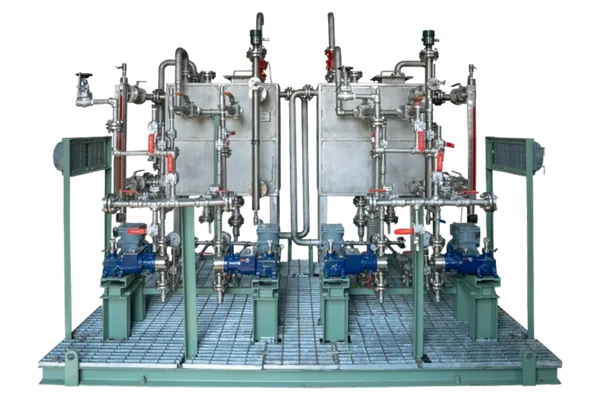
For a complete package, assess the chemical dosing system as one connected installation. This helps establish compatible interfaces between the tank, pump, feed line and injection equipment.
Increasing pump output is not a substitute for resolving an unsuitable injection arrangement or inadequate contact time.
Establish Dimensions from the Actual Installation
Two pipelines with the same nominal diameter can have different connection geometry. The distance through the nozzle, flange or fitting must be included when establishing the probe dimensions.
Provide a drawing showing the available process connection and surrounding space. Ask for the proposed assembly drawing to identify the outlet position and overall dimensions.
Check that it answers these questions:
- Where will the tip sit in its operating position?
- What process and chemical-inlet connections are supplied?
- Is an orientation requirement specified?
- Can personnel reach the valves and fittings?
- Is there room to remove or withdraw the equipment?
For a replacement, compare the complete specification. Matching a thread size does not prove that two assemblies are interchangeable.
Decide How the Quill Will Be Maintained
Choose the access arrangement around the work the site expects to perform.
A fixed assembly may suit an installation where appropriate isolation or shutdown access is available. A retractable design may support access between outages, provided the complete equipment permits the intended operation.
|
Maintenance Question |
Why It Matters |
| When can the injection point be isolated? | Establishes whether planned access is practical |
| How much removal space is available? | Helps determine whether servicing is physically possible |
| What tools are required? | Defines equipment and handling needs |
| Which parts can be replaced? | Supports spare-parts planning |
| What operating limits apply during retrieval? | Establishes the permitted maintenance conditions |
Retractable construction does not automatically permit removal under every operating condition. The selected model’s instructions and the site’s approved procedure remain essential.
Allow for Backflow Control and Deposit Inspection
Where reverse flow must be controlled, define the check-valve requirement in the specification.
Confirm its materials, opening characteristics and suitability at the intended dosing rates. Keep this function separate from the isolation needed to maintain the assembly.
Deposit inspection also deserves a place in the maintenance plan. Hypochlorite applications can experience restrictions where chemical and water interact. Ask how the proposed arrangement allows the relevant parts to be inspected and serviced.
Cleaning instructions must suit both the chemical and equipment. Do not apply a generic cleaning solution or method without checking the approved guidance.
Prepare a Complete Quotation Request
Before contacting a supplier, collect the following information:
| Enquiry Item |
Information to Include |
| Chemical duty | Product name, concentration and temperature |
| Required delivery | Minimum, normal and maximum dosing flow |
| Water pipeline | Size, connection and operating conditions |
| Design basis | Applicable pressure and temperature requirements |
| Access | Fixed or retractable arrangement and available clearance |
| Included equipment | Probe, valves, fittings and retrieval provisions |
| Project records | Drawings, inspections and specified documentation |
For drinking-water installations, identify the applicable approval requirements early. Confirm that any claimed approval covers the proposed materials and configuration.
Make the Selection Around the Treatment Duty
A suitable assembly brings the chemical, pipeline and maintenance requirements together. Start with complete operating information, then confirm the proposed materials, dimensions, valves and supply scope.
Need help reviewing your application? Contact NND Oil & Gas with your chemical details and water-line conditions to discuss a quotation.
Frequently Asked Questions
Can One Assembly Serve Both Chlorine Gas and Hypochlorite Dosing?
Do not assume interchangeability. Gas and liquid chemical services require their own equipment assessment, including materials and operating arrangements.
Is a Stainless Steel Probe Always Suitable?
No. Suitability depends on the exact grade and service conditions. Other wetted parts, including seals and valve internals, must also be checked.
Will Installing a Quill Ensure Effective Disinfection?
No. It provides the chemical introduction point. Treatment effectiveness also depends on the dose, water conditions, mixing, contact time and process controls.