A pump described as suitable for high-pressure carbon dioxide is not automatically suitable for every CO₂ application.
The fluid may enter the equipment as a liquid, become supercritical elsewhere in the process or already be supercritical at the inlet. These are different duties, even when the specified discharge pressures look similar.
Understanding where each condition occurs helps you prepare a clearer specification and avoid selecting equipment from pressure ratings alone.
What Is the Difference Between Liquid and Supercritical CO₂?
Liquid carbon dioxide exists within a particular pressure and temperature region. Its condition cannot be established from either measurement alone.
For pure CO₂, the critical point is approximately:
- 31°C critical temperature.
- 73.8 bar absolute critical pressure.
CO₂ is supercritical when both its temperature and pressure exceed these values. In this region, there is no distinct liquid–vapour phase boundary.
Pressure above 73.8 bar alone does not make CO₂ supercritical. If the temperature remains below the critical temperature, the fluid may instead be a compressed liquid, depending on the conditions.
These reference values apply to pure CO₂. Mixtures require their own property assessment.
Why the Pump Inlet Matters
The condition entering the pump is a central selection requirement.
A pump designed to receive liquid CO₂ needs suitable liquid supply conditions. A process operating with supercritical CO₂ downstream does not necessarily require the pump itself to receive supercritical fluid.
For example, an installation may pressurise liquid CO₂ and then heat it downstream to establish the required process condition.
That differs from an arrangement where supercritical CO₂ enters the pumping equipment directly.
Before comparing models, identify the pressure, temperature and expected phase at:
- The storage or supply source.
- The pump inlet.
- The pump discharge.
- Any heating or cooling stage.
- The process connection.
A process diagram with these conditions marked is more useful than an enquiry stating only “supercritical CO₂ pump”.
Liquid vs Supercritical Service at a Glance
| Selection factor | Liquid CO₂ inlet duty | Supercritical CO₂ inlet duty |
| Fluid condition | Liquid must reach the pump within its specified inlet limits | Equipment must be explicitly suitable for the specified supercritical conditions |
| Temperature | Review the liquid supply and heat entering the inlet line | Review the complete operating temperature range |
| Pressure | Assess inlet requirements and required discharge pressure | Assess inlet, discharge and differential-pressure requirements |
| Flow specification | State capacity and the conditions used for volumetric flow | Account for density changes when defining flow |
| Sealing | Confirm suitability for the actual CO₂ conditions | Obtain confirmation for the specified pressure, temperature and duty |
| Supplier information | Liquid-service performance and inlet requirements | Explicit confirmation of supercritical-inlet suitability |
Neither column establishes a particular pump design as universally suitable.
What Changes When Selecting for Liquid Transfer?
For liquid transfer, maintaining suitable conditions before the pump is essential.
Pressure losses through the supply line and heat entering the fluid can affect the available liquid supply. The engineering review should therefore cover the source vessel, pipework and pump together.
Provide:
- Minimum and maximum source pressure.
- Liquid temperature range.
- Source liquid-level range.
- Inlet pipe dimensions and layout.
- Valves, filters and other restrictions.
- Required operating flow.
A high discharge-pressure capability does not correct unsuitable inlet conditions.
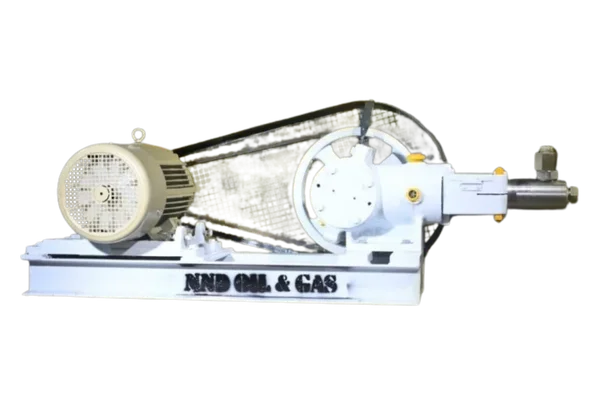
NND Oil & Gas’s liquid CO₂ transfer pump page provides a starting point for discussing transfer and filling duties. The selected model still needs assessment against the actual installation.
What Changes for a Supercritical Process?
A supercritical process adds questions about where the required pressure and temperature are established and maintained.
If the pump receives liquid, its selection must address that liquid inlet duty. Heating equipment and downstream controls then need to establish the required process condition.
If the pump receives supercritical CO₂, the supplier must assess that condition directly. A liquid-service rating is insufficient evidence.
The specification should identify:
- Inlet and outlet pressure–temperature ranges.
- Required mass or volumetric flow.
- Expected variation during operation.
- CO₂ composition and impurities.
- Start-up and shutdown conditions.
- Required materials, seals and documentation.
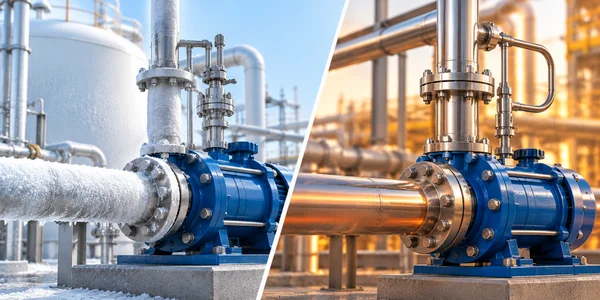
Conditions close to the critical point deserve particular attention because fluid properties can change substantially with pressure and temperature.
Specify Flow on a Clear Basis
A volumetric flow figure needs a reference condition.
The same mass of CO₂ can occupy different volumes at different pressures and temperatures. A requirement stated only as litres per hour can therefore be ambiguous.
Clarify whether the figure represents:
- Volume at the pump inlet.
- Volume at the discharge.
- Volume at another defined reference condition.
- Mass transferred per hour.
For mass-based requirements, provide the required kilograms per hour. If a volumetric conversion is needed, use an appropriate density for the stated conditions.
This avoids comparing capacities expressed on different bases.
Review Materials and Seals for the Actual Duty
A material described as suitable for CO₂ does not establish suitability across every pressure and temperature.
Review the complete wetted construction, including seals, valve components and connections. Identify water, co-solvents or other substances in the stream that may affect compatibility.
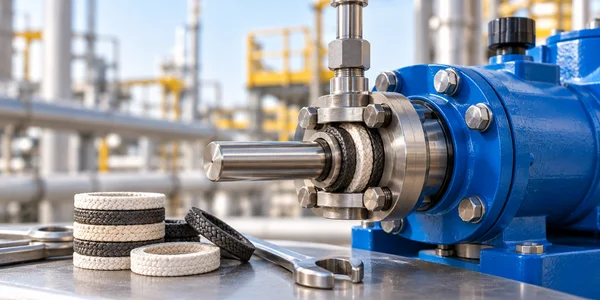
Where relevant, ask the supplier to assess seal behaviour during pressure cycling and depressurisation.
Likewise, food, pharmaceutical or extraction applications may introduce cleanliness and documentation requirements beyond general industrial service.
Include Start-Up, Shutdown and Pressure Protection
Normal operation is only part of the specification.
The system may pass through different fluid conditions while starting, stopping or depressurising. Establish how those conditions affect the pump and surrounding equipment.
The engineering review should address:
- Permitted operating sequences.
- Monitoring and shutdown functions.
- Pressure protection.
- Potentially trapped sections of fluid.
- Vent and relief destinations.
- Maintenance isolation.
These arrangements need application-specific design. They should not be inferred from the pump’s maximum pressure.
What Can NND’s Published Ratings Confirm?
NND’s product page lists liquid CO₂ pump models with flow capacities and discharge pressures.
Those figures support an initial liquid-transfer enquiry. They do not, by themselves, confirm supercritical-inlet capability or suitability for a particular extraction, circulation or injection process.
Obtain written confirmation of the proposed model’s inlet limits, operating temperature range and performance at the specified duty.
Define the Fluid Condition Before Comparing Pumps
Start by identifying what enters the pump and what the process requires downstream.
Then compare equipment against the complete pressure, temperature, flow and composition range. A high-pressure rating is useful information, but it is only one part of the selection. Planning a CO₂ pumping application? Contact NND Oil & Gas with your inlet conditions, required flow and downstream process details to request an application review.
Frequently Asked Questions
Does pressure above the critical pressure make CO₂ supercritical?
No. Pure CO₂ must also be above its critical temperature. Both conditions are necessary.
Can a liquid pump supply a supercritical process?
Yes, a suitably engineered arrangement may pressurise liquid CO₂ before downstream heating establishes supercritical conditions. This does not mean the pump can accept supercritical CO₂ at its inlet.
Can the same rating cover hydrogen service?
No. Hydrogen is a different fluid with its own equipment and material requirements. CO₂ suitability does not establish hydrogen suitability.