Selecting a chemical injection pump involves more than matching a flow rate. The equipment must handle the chemical, overcome the required discharge pressure and deliver a controllable dose throughout normal operation.
Plunger and diaphragm pumps can both perform metering duties. Their main differences lie in how they displace the liquid, separate it from the drive mechanism and manage sealing.
This guide compares plunger pumps with diaphragm metering pumps, rather than general-purpose air-operated double-diaphragm transfer pumps.
How Does a Plunger Pump Work?
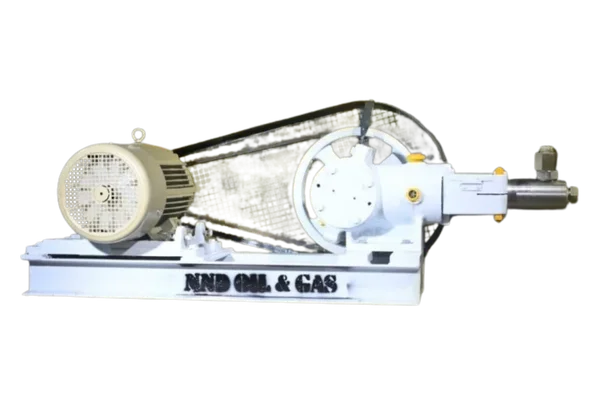
A plunger pump uses reciprocating motion to draw liquid into a chamber and displace it towards the discharge connection. Inlet and outlet check valves direct the flow.
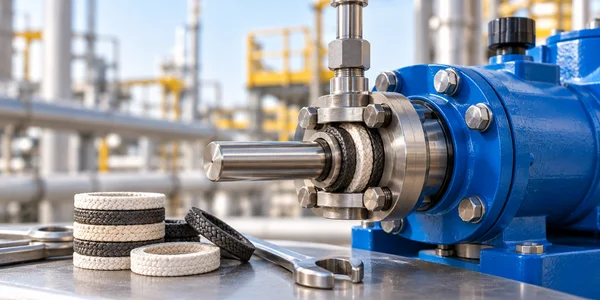
In a conventional packed design, the plunger moves through packing that seals around its surface. Packing condition and plunger wear therefore influence sealing performance and maintenance requirements.
Output may be adjusted through stroke length, operating speed or both, depending on the model.
A plunger metering pump can be considered for controlled chemical injection where the selected materials, sealing arrangement and performance meet the process requirements.
How Does a Diaphragm Metering Pump Work?
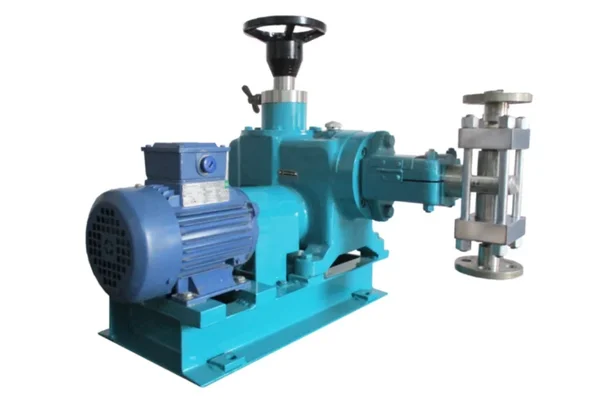
A diaphragm pump uses a flexible barrier to change the volume of the pumping chamber. Check valves control liquid movement as the diaphragm moves.
The diaphragm separates the process liquid from the drive side. Its movement may be mechanically or hydraulically actuated, depending on the design.
This distinction matters. A mechanically actuated diaphragm pump and a hydraulic diaphragm process pump can have substantially different capabilities.
Some designs include multiple diaphragm layers and rupture detection. These features must be confirmed for the proposed model rather than assumed for every diaphragm pump.
Plunger vs Diaphragm Pumps at a Glance
| Selection factor | Plunger pump | Diaphragm metering pump |
| Liquid displacement | Reciprocating plunger | Moving diaphragm |
| Process sealing | Conventional designs use packing around the plunger | Diaphragm separates the liquid from the drive side |
| Pressure capability | Model-specific; high-pressure options available | Model-specific; hydraulic designs can also serve high-pressure duties |
| Maintenance focus | Packing, plunger surface and check valves | Diaphragm, check valves and hydraulic components where fitted |
| Chemical compatibility | Review all wetted parts and packing | Review diaphragm, seals, valves and pump-head materials |
| Flow adjustment | Stroke, speed or both, depending on model | Stroke, speed or both, depending on model |
| Pulsation | Inherent to reciprocating operation | Also present in reciprocating diaphragm operation |
The comparison helps identify questions to ask. Final selection requires performance data for the actual pump configuration.
Is a Plunger Pump Always Better for High Pressure?
No. Pressure capability depends on the pump design, materials and operating conditions.
Plunger pumps are established options for high-pressure injection, but hydraulic diaphragm pumps can also handle demanding pressure duties. Comparing a plunger pump with a small mechanically actuated diaphragm pump does not represent the full range of either technology.
For either design, establish:
- Minimum, normal and maximum dosing flow.
- Normal and maximum discharge pressure.
- Pressure losses through the chemical feed line.
- Injection-valve opening requirements.
- Required performance across the operating range.
Check flow and pressure together. A maximum pressure rating does not establish the available capacity at every operating point.
How Important Is Chemical Containment?
Containment requirements can strongly influence the choice.
A conventional packed plunger design requires attention to the dynamic seal around the plunger. Establish the manufacturer’s requirements for inspection, packing adjustment and any leakage collection arrangements.
A diaphragm design avoids a reciprocating plunger seal directly exposed to the process liquid. This can make it attractive where limiting chemical release is a major selection requirement.
However, a diaphragm pump should not be described as incapable of leaking. Connections, seals and the diaphragm itself remain potential failure points.
For hazardous chemicals, review the complete containment arrangement, including any rupture detection, secondary barriers and response to a detected fault.
Which Pump Offers Better Dosing Accuracy?
Neither mechanism guarantees better accuracy in every application.
Delivered flow depends on the selected model, operating range, liquid properties and installation conditions. Check-valve performance and adequate filling of the pumping chamber also matter.
Ask the supplier to define:
- The stated accuracy and its reference basis.
- Conditions under which that accuracy applies.
- Minimum verified operating flow.
- Repeatability at the intended duty.
- Response to changing discharge conditions.
- How output will be measured during commissioning.
A wide adjustment range does not automatically mean equally reliable metering at every setting. Verify the required operating points rather than relying only on a control scale.
Review Chemical Compatibility Beyond the Pump Body
Both technologies require a complete wetted-material assessment.
For a plunger arrangement, this includes the plunger, packing, seals, valves and liquid end. For a diaphragm arrangement, include the diaphragm material, seals, valve components and pump head.
Provide the chemical identity, concentration, temperature and available compatibility information.
Also identify whether the liquid:
- Contains suspended particles.
- Can crystallise or form deposits.
- Releases gas.
- Changes viscosity with temperature.
- Requires special cleaning arrangements.
Neither design should be selected solely because the pump body is stainless steel or the diaphragm is described as chemically resistant.
Compare Maintenance and Whole-System Costs
Purchase price is only one part of the decision.
Assess expected maintenance work, access, replacement parts and the consequences of stopping chemical injection.
For a packed plunger pump, review packing service and plunger inspection. For a hydraulic diaphragm pump, include the hydraulic system and any monitoring components in the maintenance plan.
The surrounding installation also affects performance. Review suction piping, pressure protection, calibration equipment and injection components as part of the complete chemical dosing system.
A lower-cost pump may offer little saving if its maintenance requirements do not suit the site.
Information to Include in Your Enquiry
|
Required information |
Details to provide |
| Chemical | Identity, concentration and relevant properties |
| Flow | Minimum, normal and maximum dose |
| Pressure | Operating range and design requirements |
| Temperature | Normal conditions and expected extremes |
| Containment | Leakage, monitoring and collection requirements |
| Controls | Manual adjustment or required automation |
| Installation | Available space, utilities and piping details |
| Maintenance | Access, spare-parts and service requirements |
These details allow suppliers to compare suitable configurations on the same basis.
Choose Around the Complete Injection Duty
A plunger pump may suit a duty where its pressure capability, sealing arrangement and maintenance needs align with the application. A diaphragm design may be preferable where process separation and containment requirements carry greater weight.
Compare the proposed models against the same flow, pressure, compatibility and maintenance requirements. The technology name alone is not enough to establish suitability. Need help reviewing your injection duty? Contact NND Oil & Gas with your chemical details, dosing range and operating pressure to discuss a suitable configuration.
Frequently Asked Questions
Are diaphragm pumps limited to low-pressure dosing?
No. Some hydraulic diaphragm designs serve high-pressure applications. Confirm the proposed model’s rated performance.
Is a plunger pump pulseless?
No. Reciprocating operation produces pulsating delivery. Suitable dampening or multiple-head arrangements may reduce pulsation, but the required flow stability must be assessed.
Can either pump handle corrosive chemicals?
Potentially, provided the complete wetted construction is compatible. Review the exact chemical, concentration and temperature before selecting materials.