Chemical dosing equipment must deliver treatment chemicals into a process while managing the possibility of reverse flow. When process pressure exceeds pressure in the chemical feed line, fluid may move towards the dosing equipment unless suitable provisions are in place.
An injection quill with check valve combines chemical introduction with a non-return function. However, choosing the correct assembly requires more than confirming that a valve is included.
Chemical compatibility, pressure conditions, dosing flow and maintenance access all influence selection. This guide explains how the arrangement works and what to confirm before requesting a quotation.
What Is a Chemical Injection Quill with Check Valve?
A chemical injection quill with check valve introduces treatment chemical at a specified position inside the process pipeline while helping prevent flow in the reverse direction.
The quill carries chemical into the process stream. The check valve provides directional flow control, opening under suitable forward-pressure conditions and closing according to its design when those conditions change.
The valve may be integrated into the assembly or provided separately. Its location and construction should be identified on the supplier’s drawing.
NND Oil & Gas offers chemical injection quill configurations that can be reviewed against the required connection, material, isolation and non-return arrangements.
How Does the Check Valve Work?
In a spring-loaded design, forward pressure acts against the closing force to open the valve. Chemical can then pass towards the process.
Cracking pressure describes the condition at which the valve first begins to pass flow. Reseal pressure describes its closing condition; these values should not be assumed identical. Manufacturer documentation distinguishes both characteristics.
The general operating sequence is:
- The dosing pump supplies chemical to the injection assembly.
- Available pressure overcomes the downstream conditions and valve-opening requirement.
- Chemical flows through the quill into the process.
- The valve returns towards its closed condition as the pressure relationship changes.
Do not assume the valve opens fully as soon as flow begins. Its performance must be assessed at the required dosing rate, not only at the initial opening point.
Why Is Backflow Prevention Important?
Reverse flow can introduce process fluid into equipment intended to handle the dosing chemical. The project review should identify the consequences for the chemical line, pump and associated equipment.
A check valve provides a non-return function within that arrangement. It does not, by itself, establish that the complete system meets every isolation or protection requirement.
Keep these functions separate when preparing a specification:
| Component | Main Purpose |
| Injection quill | Introduces chemical into the process stream |
| Check valve | Provides directional flow control |
| Isolation valve | Provides the specified means of isolation |
| Pressure relief device | Addresses the specified overpressure-protection duty |
| Dosing pump | Delivers the required chemical flow |
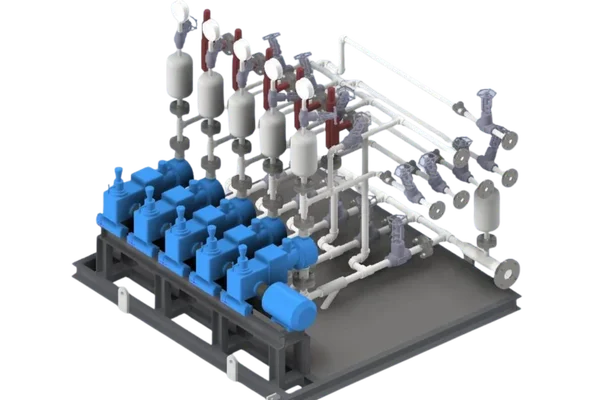
For a complete package, review the chemical dosing system so each component’s role and supply responsibility are clear.
Five Factors to Check Before Selection
1. Chemical and Process-Fluid Compatibility
Identify both fluids that the wetted components may encounter.
The probe, valve body, seat, spring and seals may use different materials. Confirm each component rather than describing the complete assembly only as stainless steel.
Manufacturer product ranges offer alternative seal materials for chemical compatibility, illustrating why the valve internals need their own review.
Provide the chemical name, concentration, temperature and available compatibility information.
2. Available Pressure and Valve-Opening Requirements
Compare the available chemical-feed pressure with the process pressure and valve requirements.
Ask the supplier to confirm the opening characteristics and performance at the intended flow. Include normal operation as well as relevant pressure variations.
A pressure rating and a cracking-pressure value describe different characteristics. Neither should be substituted for the other.
3. Minimum and Maximum Dosing Flow
Specify the full operating range, including the normal dosing point.
An assembly should not be selected solely because its connection size matches the feed line. Ask whether the proposed valve is suitable across the required range and what performance information supports that selection.
4. Maintenance Access
Confirm how the valve can be inspected or replaced.
Identify whether servicing requires removal of the quill, access to a separate component or another arrangement. Review the isolation conditions, clearance and replacement parts needed for that task.
Retractability and a check valve are separate features; the presence of one does not establish the other.
5. Installation Requirements
Check process and chemical-inlet connections, orientation requirements and available space against the approved drawing.
Follow the supplied equipment instructions. A general description of check-valve operation is not an installation or maintenance procedure.
Common Selection Mistakes
- Assuming Every Quill Includes a Check Valve: An injection assembly may be supplied with different options. State the requirement explicitly and confirm inclusion in the quotation.
- Treating the Check Valve as Maintenance Isolation: Do not rely on a non-return valve as the sole basis for opening or removing equipment. The site’s isolation requirements need a separate assessment.
- Applying Another Model’s Specifications: Published opening pressures, materials and limits belong to particular products. For example, manufacturer datasheets list model-specific check-valve and seal details; those values cannot be transferred automatically to another assembly.
- Assuming a Check Valve Solves Every Dosing Problem: Poor chemical delivery may also involve the pump, feed line or process conditions. Review the complete arrangement before attributing a performance change to one component.
A check valve should not be assumed to replace a backpressure-control or anti-siphon function unless the selected equipment is specifically designed and confirmed for that purpose.
Information to Include in Your Enquiry
A clear enquiry helps establish the required assembly before a quotation is prepared.
| Information | Details to Provide |
| Injected chemical | Name, concentration and relevant properties |
| Process fluid | Composition and operating conditions |
| Dosing flow | Minimum, normal and maximum |
| Pressure | Chemical-feed and process-pressure conditions |
| Temperature | Normal and applicable maximum conditions |
| Connections | Process and chemical-inlet requirements |
| Valve requirements | Non-return function and available specifications |
| Maintenance | Access, isolation and replacement requirements |
Include existing drawings or equipment references for replacement enquiries. Identify outstanding information rather than filling gaps with assumptions.
Select the Valve as Part of the Complete Assembly
The right choice brings together chemical compatibility, pressure conditions, dosing flow and maintenance requirements. Confirm the valve’s function and performance alongside the quill, pump and chemical feed line.
Need help specifying your injection assembly? Contact NND Oil & Gas to discuss your operating conditions and request a quotation.
Frequently Asked Questions
Does Every Chemical Injection Quill Need a Check Valve?
The requirement depends on the system design and reverse-flow risk. Confirm the necessary non-return function with the project engineer and identify whether it is integrated into the quill or provided elsewhere.
Can a Check Valve Be Added to an Existing Assembly?
This requires a review of the materials, connections, pressure conditions, flow and installation. Do not assume a mechanically compatible valve is suitable for the duty.
Does a Check Valve Prevent All Reverse Leakage?
Do not assume absolute leak-tightness. Confirm the selected valve’s leakage specifications, operating conditions and testing requirements with the supplier.