Two pumps can use compressed air yet serve quite different purposes.
A pneumatic metering pump may be selected to inject a controlled quantity of treatment chemical. An air-operated double-diaphragm pump is frequently considered for moving liquid between tanks, vessels or process stages.
There is some overlap between these duties. The useful question is whether the proposed equipment can meet the required flow, pressure and control performance.
First, Define Dosing and Transfer
Dosing involves adding a specified quantity of liquid to a process.
The quantity may need to remain constant, follow process throughput or change in response to a control signal. The acceptable variation is part of the specification.
Transfer focuses on moving liquid from one location to another. Required capacity, fluid handling and available discharge pressure often drive the selection.
For example:
- Injecting a small, controlled quantity of corrosion inhibitor is a dosing duty.
- Moving treatment chemical from a delivery container into a storage tank is a transfer duty.
- Delivering a measured batch requires both fluid movement and quantity control.
The same chemical may therefore require different pumps at different points in a facility.
How the Pumping Mechanisms Differ
Pneumatic metering pumps use an air-driven mechanism to operate a liquid end designed for controlled delivery. The liquid-end construction varies by model.
An AODD pump alternates the movement of two diaphragms. Inlet and outlet check valves direct the liquid through the pump as the chambers fill and discharge.
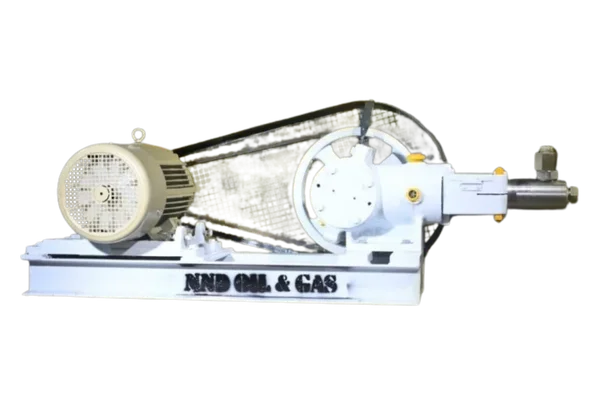
NND Oil & Gas’s pneumatic metering pump uses a plunger design. It should therefore be compared with the proposed AODD configuration using actual performance information, rather than assuming both pumps behave alike because they share an air supply.
Compare the Required Performance
| Selection factor | Pneumatic metering pump |
AODD pump |
| Common duty | Controlled chemical addition | Fluid transfer and circulation |
| Flow selection | Required dosing range and accuracy | Capacity at the operating conditions |
| Output adjustment | Model-specific displacement or cycling controls | Air supply and system resistance; additional controls may be available |
| Pressure capability | Depends on drive and liquid-end design | Depends on pump design and available air supply |
| Solids handling | Must be confirmed for the liquid end | Options exist for suitable solids-bearing fluids |
| Quantity verification | Calibration or suitable measurement | Measurement and controls needed where quantity matters |
These are selection considerations, not universal limits. Model-specific data should determine the final choice.
Can an AODD Pump Be Used for Dosing?
An AODD pump can form part of some dosing installations, particularly where its delivery characteristics meet the process requirement.
However, changing the air regulator setting does not by itself establish accurate chemical delivery.
Where dosing is required, assess:
- Minimum controllable flow.
- Required accuracy and repeatability.
- Response to changing backpressure.
- Measurement and feedback arrangements.
- Batch or continuous operation.
- Pulsation at the injection point.
A general transfer pump should not be assumed to provide the same low-flow control as a purpose-selected metering arrangement.
Equally, it would be inaccurate to state that all AODD pumps are unsuitable for dosing. The complete configuration matters.
Consider Pressure and Flow Together
A headline capacity provides limited information without the operating pressure.
For either pump type, assess performance at the actual duty. Include the resistance of the piping, valves and destination process.
Pressure changes can affect delivery differently across designs. Request performance data for the proposed pump and control arrangement.
An installation moving liquid into an atmospheric tank presents a different requirement from injecting chemical into a pressurised pipeline.
NND Oil & Gas’s AODD pump range can be reviewed for transfer applications, with materials and performance confirmed for the fluid.
Do Not Overlook Pulsation
Both reciprocating plunger pumps and AODD pumps can produce pulsating flow.
Whether this matters depends on the process. A storage-tank transfer may tolerate flow variation that would be undesirable at a sensitive injection point or measuring instrument.
Where necessary, review the need for pulsation control with the supplier. A dampener must suit the pump, chemical and operating conditions.
Reducing pulsation does not automatically establish dosing accuracy. Delivered quantity still needs appropriate verification.
Match Materials to the Fluid
Neither technology is universally compatible with industrial chemicals.
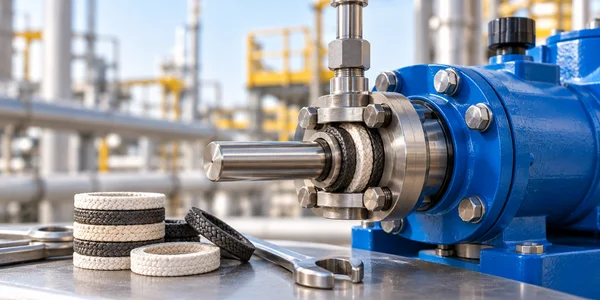
Review every wetted material, including seals, check-valve components and diaphragms or packing. Consider concentration, temperature and the presence of abrasive material.
For solids-bearing fluids, confirm particle size and passage limitations rather than relying on a general solids-handling claim.
For viscous liquids, review suction conditions and expected capacity at the actual viscosity.
Compare Operating and Maintenance Requirements
The purchase price is only one part of the decision.
Compare air consumption at the intended duty, inspection access, replacement parts and the effect of a failure on the process.
For the metering installation, consider calibration and control maintenance. For the AODD installation, include diaphragm and air-distribution components in the maintenance review.
The required work depends on the model, operating frequency and fluid rather than the pump category alone.
Choose Around the Required Result
For chemical injection, establish the dose and acceptable variation first. For transfer, define the quantity to move and the required operating rate.
Then compare pumps against those requirements, including the controls and accessories needed to achieve them. Comparing dosing and transfer options? Contact NND Oil & Gas with your fluid details, operating pressure and required delivery rate.
Frequently Asked Questions
Are pneumatic dosing pumps and AODD pumps the same?
No. Pneumatic describes the drive source. The pumping mechanism and intended control performance can differ substantially.
Which is the better industrial dosing pump?
The better option is the one that meets the required delivery range, accuracy, pressure and compatibility requirements. There is no single answer for every application.
Is an AODD pump automatically suitable for hazardous areas?
No. Confirm the equipment construction, applicable approvals, grounding requirements and installation conditions for the specific location.