A laboratory result can be accurate for the liquid in the container yet still give a misleading picture of the process. That happens when the collected sample does not reflect the fluid you intended to test.
Residual liquid in the sampling line, an unsuitable collection point or changes during handling can all affect the result. Better sampling starts before anyone opens a valve.
This guide explains the factors to review when planning representative liquid sampling from an industrial process line. The operating sequence should always follow the approved procedure for the installed equipment and fluid.
What Makes a Liquid Sample Representative?
A representative sample reflects the relevant characteristics of the process stream at the selected location and collection time.
What those characteristics are depends on the test. A laboratory might be measuring chemical concentration, water content, suspended material or another quality parameter. The sampling arrangement must preserve the properties that matter to that analysis.
A clear-looking sample is not necessarily representative. Equally, a sample containing particles is not automatically contaminated. If those particles belong to the process and are part of the measurement objective, removing them could distort the result.
Start by agreeing what the sample needs to show.
Define the Purpose Before Choosing a Sampling Point
The sampling location should answer a specific process question.
For example, checking the composition of incoming material requires a different location from assessing a blended product downstream. Sampling near a chemical addition point may also produce different results from sampling after sufficient distribution has occurred.
Before selecting a connection, establish:
- Which process stream needs testing.
- What the laboratory will measure.
- Whether the sample represents normal operation or a particular event.
- Whether solids, separate phases or volatile components must be retained.
- How often samples are required.
One convenient sampling point may not answer every monitoring question.
Review the Connection and Sampling Path
The route between the process line and the container can influence the sample.
A connection containing stagnant liquid may initially deliver material from an earlier operating condition. Long tubing runs and unnecessary internal spaces can make it harder to obtain a sample that reflects the current stream.
Review the arrangement for:
| Area |
What to assess |
| Process connection | Whether it accesses the intended fluid or phase |
| Sampling probe | Suitability for the line geometry and sampling objective |
| Tubing | Length, internal volume and material compatibility |
| Valves and fittings | Potential retention areas and maintenance condition |
| Collection interface | Compatibility with the selected receiver |
A probe position should be selected for the actual application. There is no single insertion depth suitable for every pipe, fluid and measurement.
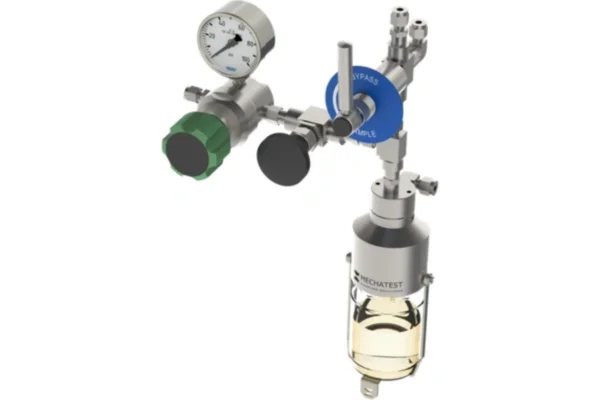
NND Oil & Gas’s liquid sampling system can be configured around the process connection, fluid characteristics and sample collection requirements.
Account for Residual Fluid
Liquid remaining from a previous collection can affect the next sample. The same applies to cleaning fluid or material left after maintenance.
The approved sampling procedure should establish how the flow path is prepared before collection. This may include a defined flushing or circulation arrangement, depending on the installation.
Avoid applying a universal flushing time. The required preparation depends on the system’s internal volume, available flow, fluid properties and disposal or return arrangements.
The procedure should also state where displaced liquid goes. An uncontrolled discharge is not a suitable substitute for a designed collection, recovery or disposal route.
Preserve the Properties Being Measured
A sample can change after leaving the process line.
Pressure reduction may alter a volatile liquid’s composition. Temperature changes can also influence its condition. Contact with air, unsuitable surfaces or an incompatible closure may introduce further changes.
Review these questions with the laboratory and equipment supplier:
- Can the fluid be collected at atmospheric pressure without affecting the intended test?
- Does it require a pressure-containing receiver?
- Are temperature control or particular handling conditions necessary?
- Could the container material interact with the sample?
- How long can the sample wait before analysis?
Bottle collection and pressure-containing cylinder collection serve different duties. The receiver must suit both the fluid and the analytical requirements.
Use the Correct Container and Identification
A clean container is only part of the requirement. It must also be compatible with the sample and appropriate for the test method.
Confirm the required material, closure, sample quantity and preparation with the laboratory. Do not assume that a container used successfully for one analysis will suit another.
Label the sample so the result can be connected to the operating conditions. Useful records include:
- Sample point identification.
- Collection date and time.
- Process fluid or batch reference.
- Relevant operating conditions.
- Collector’s name.
- Any unusual conditions observed.
These details help explain differences between results collected on separate occasions.
Keep Collection Practices Consistent
Comparing results becomes more useful when samples are collected under comparable conditions.
Changes in sampling location, preparation, receiver or timing can introduce differences unrelated to the process itself. Document the agreed method and record any departures.
If results suddenly change, review both the process and the sampling practice. A damaged seal, altered valve arrangement or different container may deserve investigation alongside a genuine operating change.
Build Sampling Around the Test Requirement
Reliable process information depends on more than collecting enough liquid. The location, flow path, receiver and handling arrangements all influence what reaches the laboratory.
Define the measurement objective first, then select equipment and procedures that preserve the relevant sample characteristics.
Planning a new sampling point? Contact NND Oil & Gas with your fluid details, operating conditions and laboratory requirements to discuss a suitable arrangement.
Frequently Asked Questions
Does clear liquid mean the sample is representative?
No. Appearance alone cannot confirm composition, freshness or suitability for the intended analysis. A sample may look normal while containing residual liquid from an earlier collection.
Should every sample be filtered?
No. Filtration can remove material that the laboratory needs to measure. Only include it where the sampling objective and analytical method require it.
Can the same procedure be used at every sampling point?
Not automatically. Different fluids, pressures, temperatures and equipment arrangements may require different procedures.