In oil and gas processing facilities, separation equipment plays an important role in preparing produced fluids for downstream operations. Depending on the process requirements, a plant may need to separate gas from liquids or divide a mixture into gas, oil, and water phases.
However, selecting the right separator vessel is only one part of the equipment decision. Engineers must also determine how the equipment will be supplied, installed, connected, and integrated into the wider process system.
Two common approaches are installing an individual separator or using a skid-mounted separator package. Both can perform the required separation duty, but they differ in how supporting equipment, piping, valves, instrumentation, and structural components are arranged.
Understanding these differences helps plant owners and project engineers choose an arrangement that suits their process requirements and site conditions.
What is an Individual Separator?
An individual separator is a process vessel designed to separate different phases of a fluid stream. Depending on the application, it may perform gas-liquid separation or separate gas, oil, and water.
The separator vessel is generally installed as one component within a larger process system. Supporting equipment, piping, valves, instruments, and control arrangements may be supplied or installed separately, depending on the project scope. For example, a production facility receiving a mixture of gas, oil, and produced water may use a three-phase separator to divide the incoming stream into separate outlets.
An individual separator arrangement may include:
- Separator pressure vessel.
- Inlet and outlet connections.
- Internal separation components.
- Liquid level measurement and control arrangements.
- Pressure and temperature instruments, where required.
- Supporting process piping and valves.
- Drain and vent connections.
The exact configuration depends on the process duty, fluid characteristics, operating pressure, temperature, and applicable design requirements.
What is a Separator Skid?
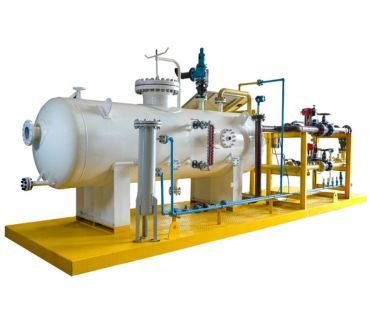
A separator skid is an integrated process package that combines a separator vessel with supporting equipment and components on a common structural frame. Instead of installing each component separately at the plant, the package is assembled as a coordinated unit before transportation to the project site.
Depending on the project requirements, a separator skid may include:
- Separator vessel.
- Structural skid frame.
- Process piping and manifolds.
- Manual and automated valves.
- Pressure and level instruments.
- Control and safety devices.
- Drain and vent connections.
The arrangement is developed according to the process requirements and the available installation space. For example, a facility may integrate a three-phase separator, piping, valves, and instrumentation into a single customized process skid instead of installing them separately.
Separator Skids vs Individual Separators: Key Differences
The main difference is the scope of equipment integration and supply. An individual separator primarily refers to the separation vessel, while a separator skid includes the vessel and supporting components arranged as an integrated package.
| Comparison factor | Individual separator | Separator skid |
| Equipment scope | Separator vessel | Vessel with supporting components |
| Structure | Separate foundation or supports | Common structural frame |
| Piping | Plant piping is typically connected on site. | Integrated into the package |
| Instrumentation | Vessel-mounted instruments may be supplied with the vessel. Confirm what is included. | Integrated into the package |
| Transportation | Vessel transported individually | Transported as an assembled package when size, weight and route limits allow. |
| Installation | Site assembly and connections | Positioning, plant connections and commissioning, with remaining site work defined by the supply scope. |
| Design | Vessel-focused | Vessel and package integration |
| Maintenance | Depends on plant layout | Depends on skid layout |
These are general differences. The actual supply scope can vary between projects, so the equipment datasheet, package specification, and contractual scope should be reviewed before making a comparison.
When is an Individual Separator Suitable?
An individual separator may be suitable when the project requires a separation vessel that will be integrated into an existing plant or a larger process system.
This arrangement can be considered in situations such as:
Existing Plant Expansion
An operating facility may need an additional separator to increase processing capacity or support a new process requirement. If the plant already has suitable piping infrastructure, foundations, instrumentation systems, and installation resources, supplying the vessel separately may fit the existing arrangement.
Site-Specific Piping Layout
Some facilities have complex piping networks, limited installation space, or existing structural arrangements. In these cases, engineers may prefer to position the separator independently and design the surrounding piping and supporting components according to the plant layout.
Projects with Separate Equipment Packages
Some projects divide equipment supply among multiple vendors or contractors. The separator vessel may be procured separately, while piping, valves, instrumentation, and installation are handled under different packages.
This approach requires clear coordination of mechanical interfaces, connection details, instrumentation requirements, and installation responsibilities.
Maintenance and Equipment Replacement
If an existing separator needs replacement, an individual vessel may be appropriate when the supporting process infrastructure can remain in place. However, engineers should verify that the replacement vessel matches the required dimensions, pressure rating, materials, nozzle orientation, and process specifications.
For an example of an individually supplied separation vessel, see NND’s oil and gas separator product page.
Important Factors to Consider Before Selecting Either Option
The choice between an individual separator and a skid-mounted package should be based on the complete project requirements rather than installation convenience alone.
Process Requirements
The separation duty must be established first. Engineers should identify whether the process requires gas-liquid separation or three-phase separation involving gas, oil, and water.
Other important inputs include fluid composition, flow rates, operating pressure, temperature, and required outlet conditions. The vessel must be designed for the required separation duty regardless of whether it is supplied individually or as part of a skid.
Available Installation Space
The available site area can influence the equipment arrangement. An individual vessel may be positioned within an existing plant layout, while a skid requires space for its structural frame and integrated components. Engineers should also consider access for transportation, lifting, installation, inspection, and future maintenance.
Project Schedule and Installation Scope
The project team should compare the work required at the manufacturing location with the work remaining at the site. A skid package can move some assembly activities away from the plant, but it does not eliminate site installation work.
The overall schedule should account for engineering, fabrication, inspection, transportation, foundation preparation, mechanical connections, and commissioning.
Maintenance and Accessibility
Maintenance requirements should be evaluated during the design stage. For an individual separator, engineers need to consider access to vessel connections, instruments, valves, and inspection points. For a skid, the arrangement should also provide suitable access to the integrated piping and other components. A compact package should not compromise the space required for inspection, component replacement, or routine maintenance.
Project Cost and Scope
Comparing only the purchase price of an individual vessel with the price of a complete skid can lead to an incomplete cost assessment.
A fair comparison should consider:
- Vessel and supporting equipment costs.
- Piping, valves, and instrumentation.
- Structural fabrication.
- Transportation and lifting.
- Site installation and connection work.
- Engineering and inspection requirements.
- Maintenance access and future modifications.
The most suitable arrangement is the one that meets the process requirements while fitting the project’s overall technical and commercial constraints.
Can an Existing Individual Separator Be Converted into a Skid Package?
An existing separator vessel may sometimes be incorporated into a skid-mounted arrangement, but this depends on its design, condition, dimensions, connections, and the requirements of the new package.
The engineering assessment should consider:
- Vessel weight and structural support requirements.
- Existing nozzle locations and process connections.
- Required piping and valve arrangements.
- Instrumentation and control interfaces.
- Foundation and structural loading.
- Transportation and lifting limitations.
- Applicable pressure vessel and piping requirements.
The existing vessel must also be checked for suitability for its intended service. Simply placing a separator on a structural frame does not automatically make it suitable for a new process application. Any modification should be reviewed by qualified engineering personnel and carried out in accordance with applicable design requirements.
Conclusion
Individual separators and separator skids serve different equipment-supply and installation approaches. An individual separator may be suitable when a plant needs a vessel that can be integrated into existing infrastructure or a project with separately supplied equipment. A separator skid may be more appropriate when the project requires the separator and supporting components to be assembled into an integrated package before delivery.
Neither arrangement is universally better. The decision should consider process requirements, installation conditions, project scope, transportation, maintenance access, and total project cost. Evaluating these factors early helps engineers select an arrangement that fits the plant’s operating requirements and project execution plan.
Frequently Asked Questions
Is a separator skid the same as an individual separator?
No. An individual separator generally refers to the separation vessel, whereas a separator skid combines the vessel with supporting components such as piping, valves, instrumentation, and a structural frame.
Are separator skids suitable for existing plants?
They can be suitable for existing plants if the package dimensions, process connections, structural requirements, and available installation space are compatible with the facility.
Which option is more cost-effective: an individual separator or a separator skid?
It depends on the project. The comparison should include equipment, piping, instrumentation, fabrication, transportation, installation, and commissioning costs rather than considering the vessel purchase price alone.